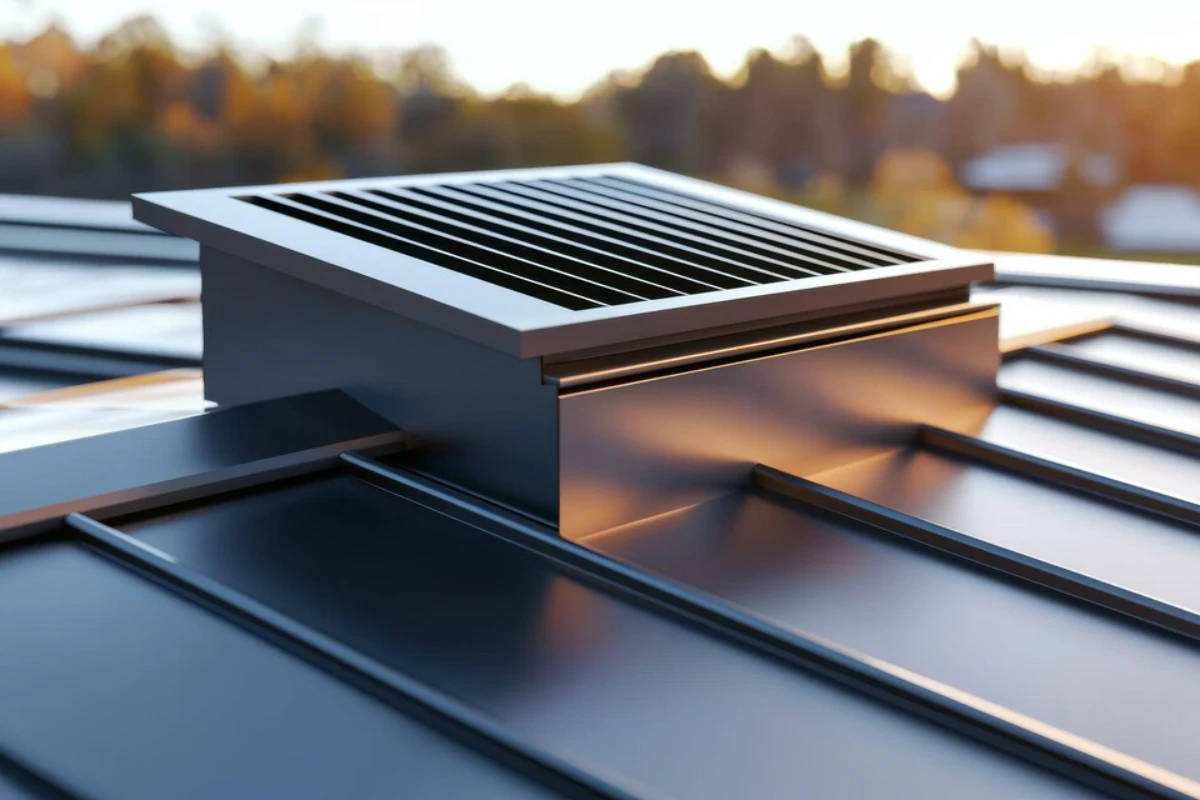
What Roof Flashing Is
Flashing is a part of every roof that homeowners may not know by name, so understanding it helps a Pebble Brook homeowner. Here is what it is and where it is used.
Sealing Transitions and Penetrations
Flashing is metal installed to seal the roof's transitions and penetrations, the spots where the main field of the roof meets something else or is interrupted. Its job is to direct water away from these vulnerable points and keep it from getting under the roof. Flashing is essential to a watertight roof, sealing the places the panels alone cannot. It handles the roof's tricky junctions. It keeps water out at the weak points.
Where Flashing Is Used
Flashing is used at chimneys, where the roof meets the chimney, at walls, where a roof meets a vertical wall, in valleys, where two roof slopes meet, around skylights, around vent pipes and other penetrations, and at roof edges and other transitions. Each of these spots needs flashing to stay watertight. These are the locations where flashing does its work. They are the roof's junctions and openings. Flashing seals them all.
Why These Spots Need It
These transitions and penetrations need flashing because they are interruptions in the roof's surface where water could otherwise get in. The panels shed water across the field, but at a chimney, valley, or vent, the surface is broken, and flashing seals that break. Without proper flashing, these spots would leak. Flashing is what makes the roof's junctions and openings watertight. They depend on it for protection. It is essential at these points.
Part of a Complete Roof
Flashing is an integral part of a complete, watertight metal roof, working with the panels, underlayment, and other components. A roof is only as watertight as its flashing at the vulnerable points, so proper flashing is essential to the whole. Flashing is not an afterthought but a key part of the roof system. It completes the roof's water defense. It works with the rest of the roof.
What Flashing Is, in Short
Flashing is metal installed to seal the roof's transitions and penetrations, chimneys, walls, valleys, skylights, vents, and edges, directing water away from these vulnerable points. It is essential to a watertight roof, sealing the spots the panels alone cannot.
One point worth making clear for Pebble Brook homeowners is that when a metal roof develops a leak, the instinct is often to assume something is wrong with the metal panels themselves, but in practice the flashing is a far more common culprit, and understanding why can save a homeowner worry and help them describe the problem accurately. The flashing is the metal that seals all the places where the roof's surface is interrupted or meets something else, the base of a chimney, the line where a roof slope meets a vertical wall, the valley where two slopes come together, the perimeter of a skylight, and the spots where vent pipes and other penetrations pass through the roof. These transitions and penetrations are the roof's weak points for water entry, because the panels can shed water beautifully across the open field of the roof, but at these junctions the continuous surface is broken, and it falls to the flashing to direct water away and keep it from getting underneath. That is exactly why leaks so often originate at the flashing rather than in the middle of a panel, the flashing is doing the hardest water management work on the roof. Flashing can fail for several reasons, the sealant that helps seal it can degrade over the years, fasteners can loosen, the flashing itself can corrode or be lifted or damaged by wind and debris, or it can have been installed improperly in the first place, since flashing requires correct technique to seal well. The practical upshot is that for a leak appearing near a chimney, valley, vent, or wall, the flashing is the natural first thing to check, and many such leaks are resolved by repairing or replacing the flashing.
It also helps Pebble Brook homeowners to understand that flashing repair ranges from straightforward to more involved depending on what has actually failed, and that getting it done correctly is what determines whether the repair lasts. The process always begins with a proper inspection to diagnose the problem, because the right repair depends on whether the flashing itself is still sound or has failed. In cases where the flashing is in good condition but the sealant has degraded or the flashing has worked loose, the repair can be relatively minor, applying fresh, appropriate sealant where the old has failed or properly resecuring the loose flashing, which restores the watertight seal. In cases where the flashing has corroded, been physically damaged, or was improperly installed to begin with, a more substantial repair is needed, removing the old flashing and installing new flashing correctly to seal the transition or penetration robustly. In either case, the key to a repair that holds is doing the work correctly, with proper technique, suitable materials, and careful attention to how the flashing directs water, since flashing only seals when it is installed right. This is one of the reasons that the choice of contractor matters for flashing work, both on a new roof and in repairs, because flashing is precisely the kind of detail where cutting corners leads to leaks down the line. For a homeowner, the reassuring part is that flashing problems, though a common source of leaks, are usually quite repairable, and a proper repair restores the roof's watertight seal at the vulnerable spot and protects the home. Including the flashing in periodic roof inspections also helps, by catching deteriorating sealant or loosening flashing before it can cause a leak.
One point worth making clear for Pebble Brook homeowners is that when a metal roof develops a leak, the instinct is often to assume something is wrong with the metal panels themselves, but in practice the flashing is a far more common culprit, and understanding why can save a homeowner worry and help them describe the problem accurately. The flashing is the metal that seals all the places where the roof's surface is interrupted or meets something else, the base of a chimney, the line where a roof slope meets a vertical wall, the valley where two slopes come together, the perimeter of a skylight, and the spots where vent pipes and other penetrations pass through the roof. These transitions and penetrations are the roof's weak points for water entry, because the panels can shed water beautifully across the open field of the roof, but at these junctions the continuous surface is broken, and it falls to the flashing to direct water away and keep it from getting underneath. That is exactly why leaks so often originate at the flashing rather than in the middle of a panel, the flashing is doing the hardest water management work on the roof. Flashing can fail for several reasons, the sealant that helps seal it can degrade over the years, fasteners can loosen, the flashing itself can corrode or be lifted or damaged by wind and debris, or it can have been installed improperly in the first place, since flashing requires correct technique to seal well. The practical upshot is that for a leak appearing near a chimney, valley, vent, or wall, the flashing is the natural first thing to check, and many such leaks are resolved by repairing or replacing the flashing.
Get Your Flashing Checked
Pebble Brook Metal Roofing inspects and repairs metal roof flashing across Pebble Brook and Hamilton County. Call (765) 676-3491 for a free inspection of the flashing at your roof's chimneys, valleys, vents, and other vulnerable points.